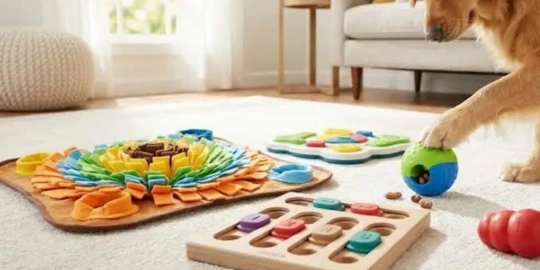
A bored dog is often a destructive dog — chewed furniture, dug-up yards, and 2 a.m. zoomies are frequently symptoms of a mind that isn’t getting enough to do. Puzzle toys give dogs a job, and for many breeds, mental exercise tires them out just as effectively as a long walk.
Why Puzzle Toys Work
Dogs are natural problem-solvers, bred over generations for tasks like tracking, herding, or retrieving. Without an outlet, that problem-solving drive gets redirected toward whatever’s available — usually your shoes or the couch. Puzzle toys give dogs a structured way to “work” for a reward, which satisfies that drive in a contained, safe way.
Our Pick: Outward Hound Hide-A-Squirrel
This plush puzzle toy hides three squeaky squirrels inside a soft tree-trunk-shaped base, turning playtime into a find-and-extract game rather than a simple chew. It’s particularly good for lower-energy mental enrichment — the kind of activity you can hand your dog on a rainy day when a full walk isn’t happening, and it’s gentler than hard puzzle feeders for dogs who prefer soft toys. Full details →
Other Puzzle Toy Styles Worth Knowing
- Treat-dispensing balls or cubes — dogs nudge or roll the toy to release kibble or treats gradually, good for slowing down fast eaters as well as providing mental stimulation.
- Snuffle mats — fabric mats with hidden pockets for kibble, engaging a dog’s nose rather than paws, which tends to be especially tiring for scent-driven breeds.
- Multi-level puzzle boards — sliding or lifting pieces that hide treats underneath, generally the most mentally demanding category and best introduced gradually so dogs don’t get frustrated.
- Automatic/interactive toys — battery-powered toys that move unpredictably, useful for solo play when you’re not home, though they don’t replace direct engagement.
Matching the Toy to Your Dog
- New to puzzle toys? Start with something simple like a Hide-A-Squirrel style toy before moving to multi-step puzzle boards — dogs can get frustrated and disengage if a puzzle is too hard right away.
- High-energy or working breeds (Border Collies, working-line retrievers) generally need more complex puzzles to stay engaged; simple treat balls may bore them quickly.
- Anxious or food-motivated dogs often do well with snuffle mats, since the nose-driven activity has a naturally calming effect for many dogs.
How Often to Rotate
Dogs habituate to puzzle toys over time — the same toy left out permanently loses its novelty. Rotating 2–3 puzzle toys weekly, rather than leaving one out indefinitely, tends to keep engagement higher.
Bottom Line
Puzzle toys aren’t just entertainment — for many dogs, especially high-energy or working breeds, they’re a genuine outlet for mental energy that reduces problem behaviors at home. Start simple, watch how your dog engages, and build up to more complex puzzles from there.
See more enrichment options in our Dog Toys category.
Affiliate disclosure: This post may contain affiliate links. As an Amazon Associate, Doggopaws earns from qualifying purchases at no extra cost to you. See our Affiliate Disclosure for details.