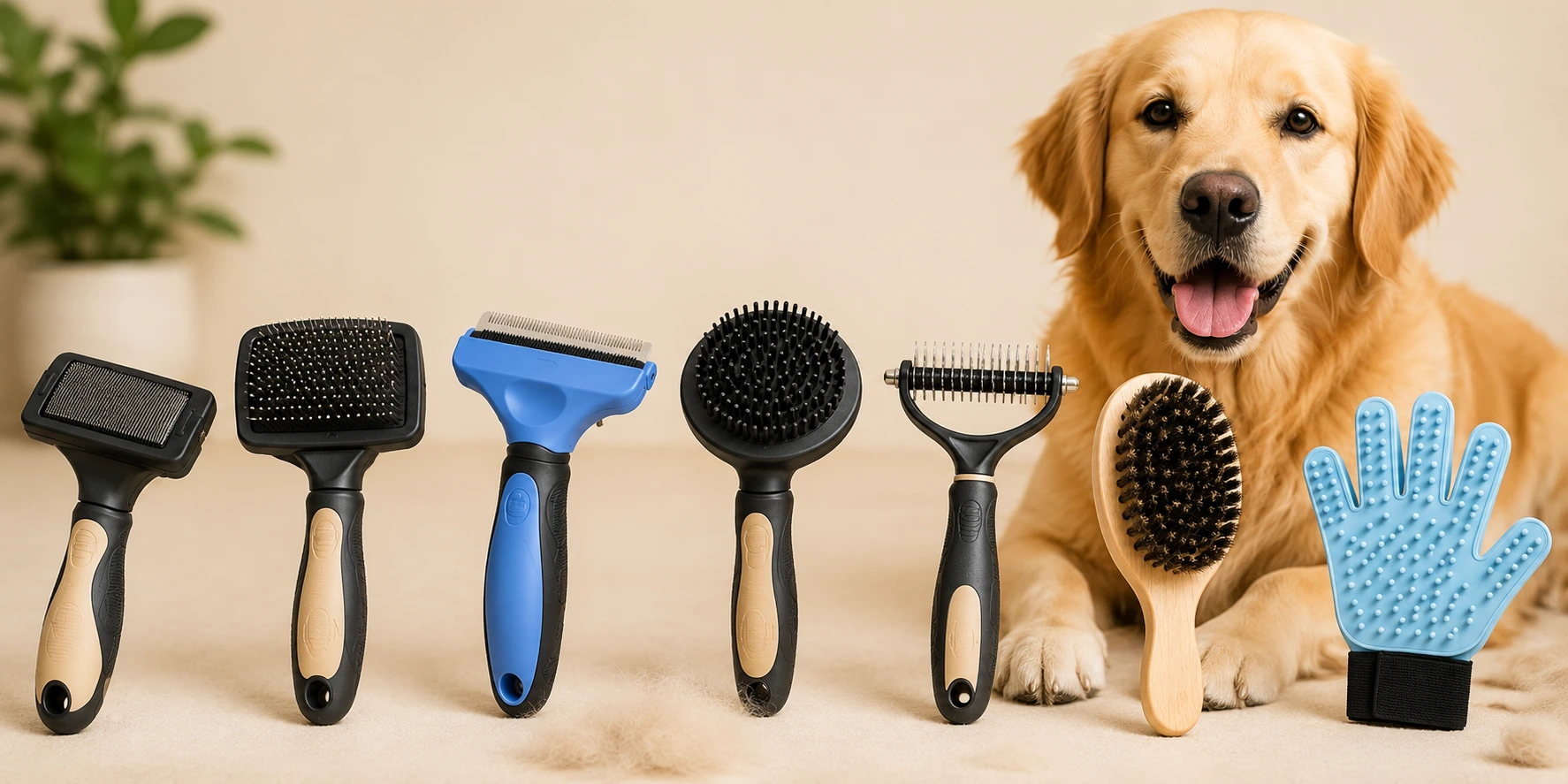
Every dog owner with a shedding breed has heard the same advice: “just brush more.” But not every brush actually removes loose undercoat — some just move surface hair around while the real shedding continues underneath. Here’s what actually works, and when to reach for each tool.
1. Undercoat Rakes (like the FURminator)
For double-coated breeds — think Labs, Huskies, Golden Retrievers — the real shedding problem lives in the undercoat, not the topcoat. A tool like the FURminator Undercoat Deshedding Tool is built specifically to reach through the topcoat and pull loose undercoat hair out without cutting healthy fur or nicking skin. This is usually the single biggest reduction in shed hair you’ll see from any tool on this list. Full details →
2. Self-Cleaning Slicker Brushes
Slicker brushes with fine, slightly bent bristles are good at working through loose fur and light tangles on the topcoat. The Hertzko Self-Cleaning Slicker Brush adds a retractable bristle mechanism, so instead of picking hair off the bristles by hand after every use, you press a button and the collected fur releases in one clump. Best used as a regular maintenance brush between deeper deshedding sessions. Full details →
3. Bristle Brushes
Best for short-haired, single-coated breeds. These won’t do much for a heavy double-coat, but they distribute natural skin oils and pick up loose surface hair effectively on breeds like Beagles or Boxers.
4. Pin Brushes
Good for longer-haired breeds with silkier coats — Cocker Spaniels, Shih Tzus — where the priority is detangling rather than deshedding. Less aggressive than a slicker brush, gentler on delicate coats.
5. Deshedding Combs
A finer-toothed option for finishing work after a rake or slicker brush, useful for catching any remaining loose hair close to the skin, particularly around the neck and hindquarters where undercoat tends to build up.
6. Grooming Gloves
Not a traditional brush, but worth mentioning — silicone nubs on a glove let you “pet” your dog while collecting loose hair, which works well for dogs who are anxious about traditional brushes.
7. Deshedding Shampoos (Paired with Any Brush)
Not a brush at all, but pairing a deshedding shampoo with a rake or slicker brush during bath time loosens hair before it becomes a shedding problem on your furniture.
How Often Should You Brush?
For heavy double-coated breeds, 2–3 times a week is a reasonable baseline, increasing to daily during seasonal shedding (“blowing coat”) in spring and fall. Short-haired breeds can usually get by with once a week.
Bottom Line
If you only buy one tool, make it an undercoat rake for double-coated breeds — it addresses the actual source of shedding rather than just the surface. Add a self-cleaning slicker brush for quick, regular maintenance in between.
Browse our full grooming lineup in the Dog Grooming category.